
Why do good ideas keep getting met with silence, resistance or polite nods?
Whether you’re pitching ideas, navigating change, or trying to get buy-in from colleagues and stakeholders, the ability to influence is one of the most valuable skills in the modern workplace, at any stage of your career.
This highly practical workshop starts with your own personal style, then opens the door to the psychological skills behind real influence: active listening, empathetic questioning and positive framing. You’ll leave understanding how different people think, how organisational culture shapes your ability to influence, and how to adapt your approach while staying entirely yourself.
We recommend:
In-person or online
6hrs
Up to 15 people
What you’ll learn & do
This workshop empowers your teams to:
- Understand your personal influencing style, and how it actually lands with others
- Explore what really drives decision-making, resistance and buy-in
- Adapt your approach for different personalities and power dynamics
- Use active listening and positive framing to disarm tension and build trust
- Explore how AI-powered tools can help tailor messages and strengthen your influencing strategy
97%
of participants rated this workshop a 4 or 5 out of 5 stars
Who is this workshop for?
- Anyone who needs others to say yes, to ideas, change, direction or priorities
- Managers, team leads or project professionals who work cross-functionally
- People whose ideas are often met with silence, resistance or polite nods
- Professionals navigating complex or political stakeholder environments
What this workshop offers
- Rooted in psychology, not tactics. Ethical influence built on understanding people, not pressure or manipulation.
- Learning that lasts. Every participant gets access to the Productivity Ninja® Academy.
- A format that fits. 6 hours, in person or live online, for up to 15 people.
- AI as an ally. Practical ways AI can help tailor messages and refine your influencing approach for greater impact.
- Built to stick. Add an Impact Clinic 1 and 3 months later to keep new habits alive.
What you’ll do
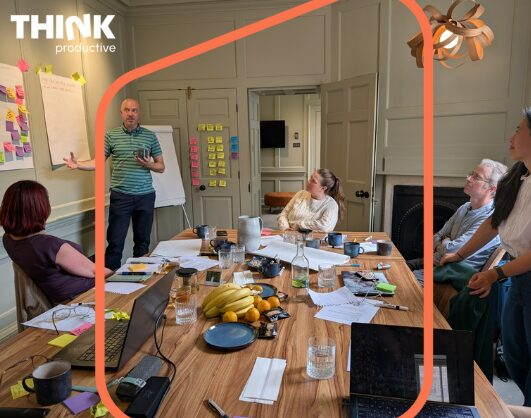
You’ll start by understanding your own influencing style, the strengths you already lean on, and the routes you might be avoiding without realising it. From there, you’ll explore what actually drives decision-making, resistance and buy-in, using real influencing tools like the 9 influencing styles and frameworks for handling objections.
You’ll practise real-world conversations, not hypothetical ones, adapting your approach for different personalities and power dynamics. Active listening and positive framing run through the whole day, giving you ways to disarm tension and build trust rather than push harder. You’ll leave with more confidence in high-stakes conversations, and a plan to apply what you’ve learned to situations that actually matter to you.
What happens when influencing works
When people learn to influence with intention, everything changes:
- Ideas get real engagement instead of silence or polite nods
- Difficult stakeholders become easier to work with, not because they’ve changed, but because the approach has
- People stop repeating the same pitch and start adapting it to who’s actually listening
- Trust builds faster, because influence comes from understanding, not pressure
- Confidence in high-stakes conversations replaces hesitation
SLASHDATA
“The 6 shortcuts which guide human behaviour, the ‘feel, felt, found’ approach to handling objections, and the 9 different influencing styles stood out to me.”
Peri Damirova
Benefits & results
The most immediate benefit is self-awareness: participants leave understanding their own influencing style and where it’s been limiting them without realising it. But the deeper shift is relational. Once someone understands how other people think, they stop repeating the same approach and start adapting it, and buy-in gets easier across the board.
What your organisation gets
People who can build trust, shift thinking and motivate action without pressure. Better cross-functional collaboration, less friction with stakeholders, and ideas that land instead of stalling in silence.
Motorway
“The practical strategies, going beyond just theory. I now feel equipped with the skills to enter situations with more confidence.”
Tino Mwadeyi
Why it matters
Good ideas don’t fail because they’re wrong, they fail because they’re delivered in a way that doesn’t land with the person who needs to say yes.
– Complex or political stakeholder environments leave good people unsure how to move things forward without pressure or tactics that feel uncomfortable
– Ideas get met with silence, resistance or polite nods instead of real engagement
– Without understanding how someone else thinks, the same pitch gets repeated the same way, and keeps landing the same way
Frequently Asked Questions
-
Yes. Many participants arrive thinking influence is something for senior leaders or extroverts. The workshop shows that influence is a skill, not a personality type. People leave with simple tools they can use regardless of confidence level or role.
-
Yes, but always in a practical, human way. We cover the psychology behind influence, different influencing styles, and how to choose the right approach for each situation. Everything is easy to apply to real work.
-
Yes. Participants work with real examples from their day-to-day roles. This helps them leave with practical next steps rather than general theory.
-
No. This workshop is rooted in ethical influence. It teaches people how to communicate clearly, build trust, frame ideas effectively and move conversations forward without pressure or tactics that feel uncomfortable.