Why rethink team communications?
Email, Slack, Teams, WhatsApp, project management apps: in a multi-platform world of work, nobody’s agreed which tool is for what. The result is inbox overwhelm, duplicated messages, and a toxic knock-on effect on wellbeing and work-life balance.
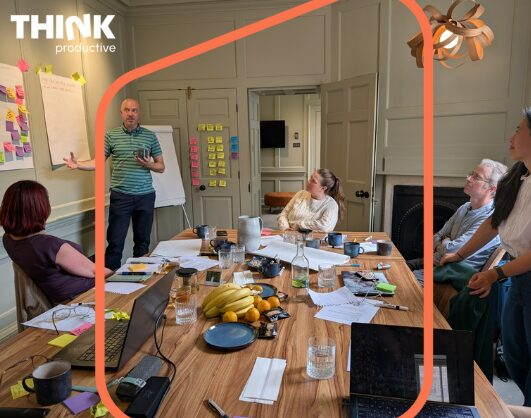
This workshop brings the right people into the room, either decision-makers or a group empowered by leadership, to design a Comms Manifesto: a shared, practical agreement for how your organisation actually communicates. Run as a half-day to draft it, or a full day to take it from draft to polished and ready to use.
We recommend:
In-person or online
3hrs
20 people
What you’ll learn & do
This workshop empowers your teams to:
- Audit your current comms tools, including email, and identify where confusion and overwhelm come from
- Learn strategies and tactics for communication that improves connection and engagement
- Draft a Comms Manifesto as a group, from what exists now to what you want it to be
- Agree shared norms for which tool to use, when, and why
- Explore how AI can reduce misunderstandings and support a more connected way of communicating
94%
of participants would recommend our workshops
Who is this workshop for?
- Organisations drowning in channel overload, with unclear expectations and constant interruptions
- Cross-functional teams building a Comms Manifesto for the wider business
- Intact teams wanting to improve their own internal communication
- Leaders who want to model good comms habits and create psychological safety around how the team talks to each other
What this workshop offers
- Psychology before technology. We audit your current comms tools together and work out what’s actually causing the confusion, not just add another tool to the pile.
- A manifesto, not just ideas. Half-day or full-day options, both ending with a practical Comms Manifesto ready to share with the wider organisation.
- Learning that lasts. Every participant gets access to the Productivity Ninja® Academy.
- A format that fits. 3 hours (half-day) or a full day, in person or live online, for up to 20 people.
- Built to stick. Add an Impact Clinic 1 and 3 months later to keep new habits alive.
What you’ll do
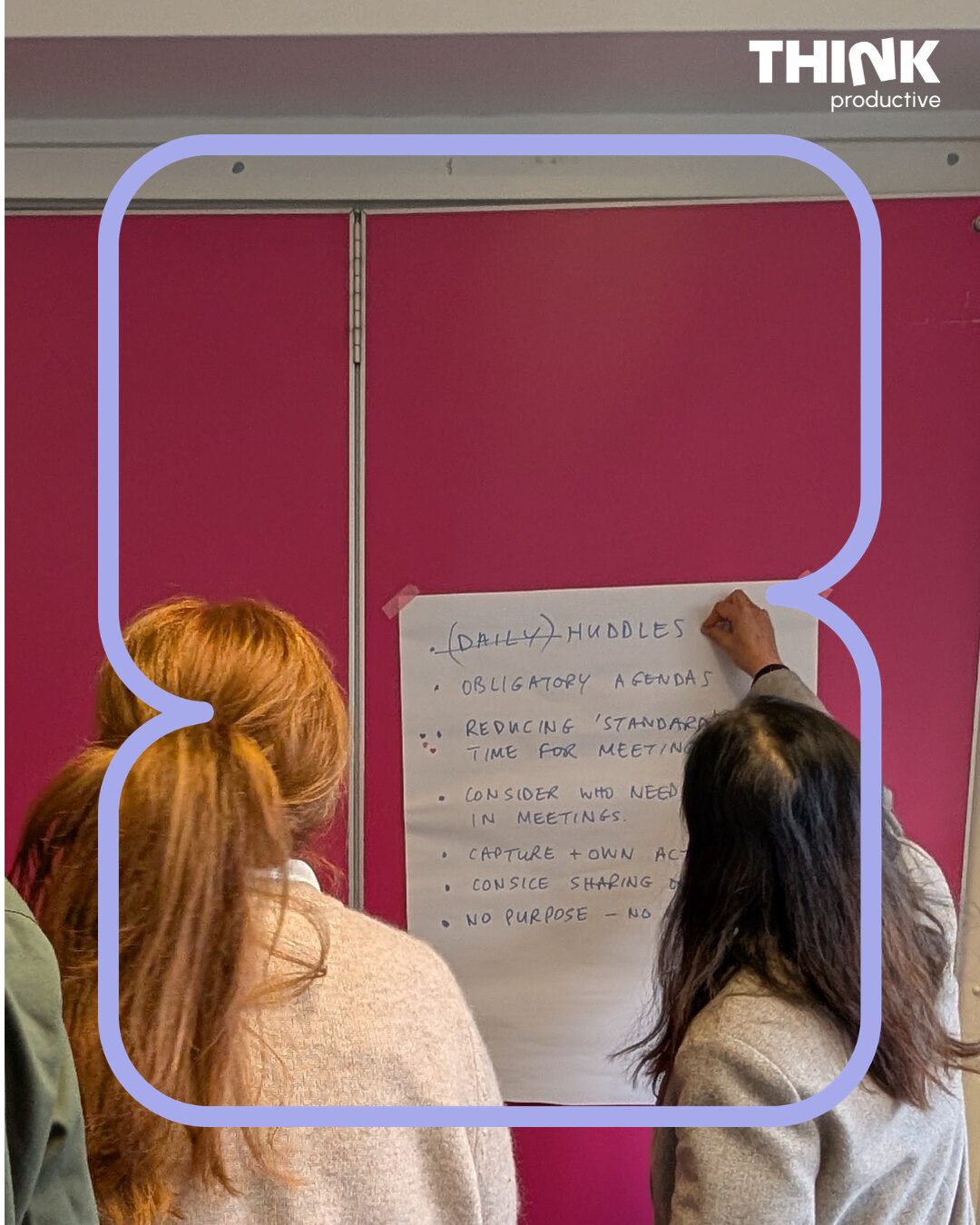
You’ll start by auditing where things actually stand: which tools your team uses, why, and where the confusion creeps in. From there, the group works together to identify what’s working, what isn’t, and what values and guidelines you’d want your comms to reflect instead.
In the half-day format, you’ll leave with a draft Comms Manifesto to refine afterwards. In the full-day format, the afternoon is a facilitated session that turns those draft ideas into a polished, practical manifesto your team can use immediately. Either way, you’ll also look at where AI can help reduce misunderstandings and support clearer, more connected communication. You’ll leave with agreed actions, not just good intentions from a productive discussion.
Keele University
“Actually coming out of the session with actions agreed has been a change from previous workshops.”
Katy Lockett
Why it matters
Teams aren’t struggling with communication because they lack channels, they’re struggling because nobody’s agreed the rules for using them.
- Too many tools with no shared logic means messages get duplicated, missed, or sent to the wrong place
- Constant notifications and blurred boundaries between channels drive overwhelm and hurt wellbeing
- Without agreed norms, culture gets shaped by habit and default, not by intention
Benefits & Results
The most immediate benefit is a shared document: a Comms Manifesto the whole team has actually agreed to, not a set of individual habits everyone interprets differently. But the deeper shift is cultural. Once a team has a shared language for how and when to communicate, the constant low-level friction of misaligned expectations starts to disappear.
What your organisation gets
Reduced overwhelm, clearer expectations, and a culture where communication supports the work instead of getting in the way of it. A manifesto that can scale from one team to the wider organisation.
What happens when communication works
When teams agree on how they communicate, everything changes:
- Messages land in the right place, first time, without duplication across tools
- Notifications and interruptions drop, because there’s a shared understanding of what’s urgent and what isn’t
- People feel more confident raising things, because expectations are clear
- Culture becomes more collaborative, not just less noisy
- New starters and distributed teams have a manifesto to follow, not guesswork
Orbis Procurement
“The group activities really got us thinking, talking and working together to highlight practical ways we can improve comms, not just within our team but across the wider organisation.”
Christina Kyriacou
Frequently Asked Questions
-
Yes. Most teams who attend are dealing with channel overload, unclear expectations and constant interruptions. The workshop helps them simplify their systems, agree on shared norms and reduce unnecessary noise so communication feels calmer and more intentional.
-
Absolutely. We look at how communication changes across distance, how to avoid “in office vs remote” misunderstandings and how to create fair, practical agreements that support clarity for everyone.
-
Both. We focus on human behaviours, attention, tone and expectations, but we also provide simple tools and communication agreements teams can start using immediately.
-
Very much so. Leaders set the tone for communication. They learn how to create psychological safety, reduce overload, communicate expectations clearly and model good habits across the team.