
Why do good teams get stuck in patterns that hold everyone back?
Today’s workplaces are full of competing demands, shifting priorities and external uncertainty. Left unaddressed, teams start protecting themselves rather than each other: mistakes get hidden, honest conversations get avoided, and people quietly disengage rather than risk getting it wrong.
This practical, interactive session builds the conditions for psychological safety, trust and resilience, whether that’s equipping leaders and managers with strategies to shape team culture, or working directly with an intact team to build clarity and trust together, on the day.
We recommend:
In-person or online
3 or 6hrs
Up to 20
What you’ll learn & do
This workshop empowers your teams to:
- Discover the four key elements for thriving teams
- Assess your team’s psychological safety with the Thriving Teams Health Check
- Reframe failure and mistakes as learning moments that drive innovation
- Build practical strategies for navigating uncertainty without losing engagement or focus
- Explore how AI can strengthen communication and support a more connected team culture

90%
of participants rated the session 4 or 5 out of 5
Who is this workshop for?
- Teams going through change, restructuring or rapid growth who need to stay connected and psychologically safe through it
- HR, L&D or OD leads wanting a session that tackles culture and performance together, not wellbeing as a separate conversation
- Managers of teams that feel disconnected, defensive or stuck in habits that block honest conversation
- Leadership teams, or intact teams, wanting flexibility: a strategy session for leaders, or a working session where the team builds trust and agreements together on the day
What this workshop offers
- Flexible by design. Run as a strategy session for leaders and managers, or a working session for an intact team.
- Grounded in real thinking. Draws on Black Box Thinking, Growth Mindset, Kindful Leadership and Struggle.
- Learning that lasts. Every participant gets access to the Productivity Ninja® Academy.
- A format that fits. 3 hours (leaders and managers) or 6 hours (intact teams), in person or live online, for up to 20 people.
- Built to stick. Add an Impact Clinic 1 and 3 months later to keep new habits alive.
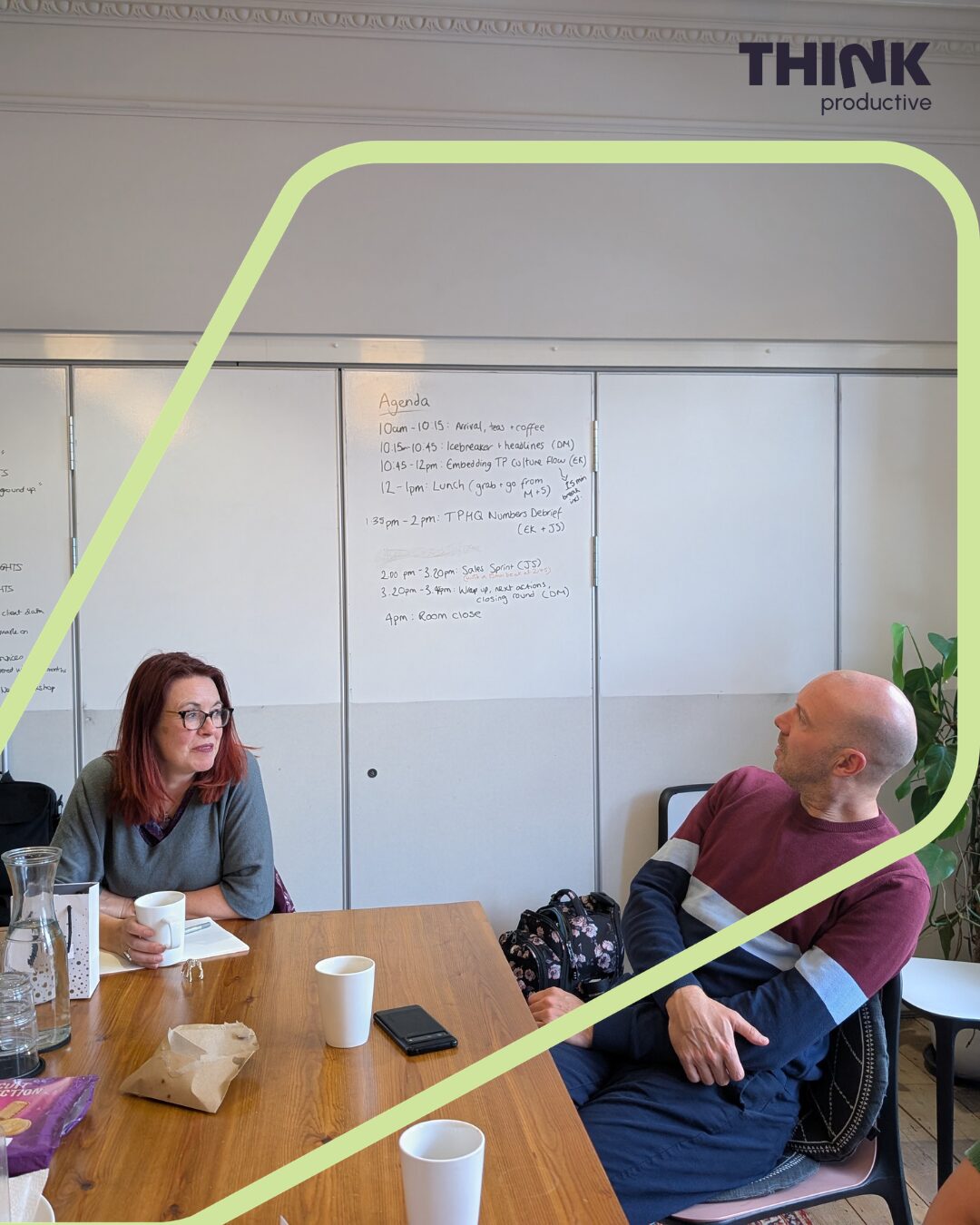
What you’ll do
You’ll start by exploring the four key elements that make teams thrive, then use the Thriving Teams Health Check to assess where your own team actually stands on psychological safety. From there, you’ll dig into reframing failure, learning to treat mistakes as information rather than something to hide, using thinking from Black Box Thinking and Growth Mindset.
The session also tackles “high-functioning fear,” the perfectionism, defensiveness and quiet disengagement that show up in teams who look fine on the surface but aren’t. You’ll explore kindful leadership, balancing clarity and compassion, and look at how AI can support clearer communication and a more connected culture. If you’re running this with an intact team, you’ll leave having built real agreements together, not just discussed the theory.
What happens when psychological safety is built
When teams build real psychological safety, everything changes:
- Mistakes become learning moments, not things to hide
- People speak up before small issues become big ones
- Perfectionism and defensiveness ease, replaced by honest, open conversation
- Teams stay engaged and clear, even through uncertainty and change
- Trust and collaboration become how the team works, not just something they aspire to
Forestry Commission
“My confidence as an HR professional and leader has changed. I am undertaking so much of what you recommend.””
Emma Martin
Benefits & results
The most immediate benefit is honesty: people leave with a shared language for talking about mistakes, uncertainty and fear without it feeling like a weakness. But the deeper shift is cultural. Once a team has real psychological safety, collaboration, innovation and resilience stop being aspirational and start being how the team actually operates.
What your organisation gets
A team who can navigate change and uncertainty without collapsing into disconnection or defensiveness. Practical tools for communication, boundaries and team agreements, embedded through real situations, not just discussed in theory.
Norgine
“Very useful background and good food for thought for more work to do with my team.”
Marc Watson
Why it matters
Thriving teams aren’t the ones with the fewest problems, they’re the ones with enough safety to actually talk about them.
- Mistakes get hidden, so the lessons in them are lost
- Fear of getting it wrong breeds perfectionism, defensiveness and quiet disengagement
- Uncertainty and change leave people reactive and disconnected, not clear and aligned
Frequently Asked Questions
-
Yes. Many teams join because they feel disconnected, overwhelmed or unclear on expectations. The workshop creates a safe, practical space to rebuild trust, strengthen communication and make work feel more manageable again.
-
It’s both. Thriving teams need clear expectations, healthy boundaries, good communication and psychological safety. We bring these elements together so teams can perform well without sacrificing wellbeing.
-
For the intact team version, yes, the biggest impact comes when people who work closely together explore their habits, challenges, and strengths in the same room. We also run a version for a mixed group of leaders, each applying what they learn back to their own team.
-
Both. Participants get simple, easy-to-use tools for communication, boundaries, team agreements and prioritisation. We then apply them to real situations so they leave with clear actions, not just ideas.
-
Yes. Leadership teams often gain valuable insight into their own working patterns, assumptions and communication habits. The workshop helps them model the behaviours they want to see across the organisation.