
Why do technically capable teams still struggle to do their best work?
Skill and effort aren’t always what’s missing. Often, what’s actually holding a technically capable team back is the ability to manage the emotions getting in the way, tension that doesn’t get named, feedback that lands badly, reactions under pressure nobody’s quite sure how to handle.
This masterclass gives you a framework for understanding why people, including yourself, behave the way they do, and how to change it if needed. You’ll build genuine emotional awareness, self-management and social skills, making work relationships easier and more rewarding for you and everyone around you.
We recommend:
In-person or online
3hrs
Up to 20 people
What you’ll learn & do
This workshop empowers your teams to:
- Understand the theory of emotional intelligence and its key elements
- Reflect honestly on your own level of emotional intelligence
- Identify your own emotional triggers, and why they trigger you specifically
- Build practical strategies to raise emotional intelligence in yourself and others
- Discover how AI tools can help you recognise communication patterns and understand colleagues’ perspectives
94%
of participants would recommend our workshops
Who is this workshop for?
- Teams that are technically capable but struggling with tension, communication breakdowns, or a culture where people hold back rather than speak up
- L&D or HR leads wanting a practical, grounded introduction to emotional intelligence, useful rather than overly personal or therapeutic
- Managers of people who react strongly under pressure, struggle with conflict, or find honest feedback difficult to give or receive
- Anyone building a leadership programme who wants self-awareness and emotional regulation as a foundation before more advanced management skills
What this workshop offers
- Grounded, not therapeutic. Practical and workplace-focused, not a sensitive subject turned into something uncomfortable.
- Learning that lasts. Every participant gets access to the Productivity Ninja® Academy.
- A format that fits. 3 hours, in person or live online, for up to 20 people.
- AI as an ally. Practical ways AI can help recognise communication patterns and understand colleagues’ perspectives.
- Built to stick. Add an Impact Clinic 1 and 3 months later to keep new habits alive.
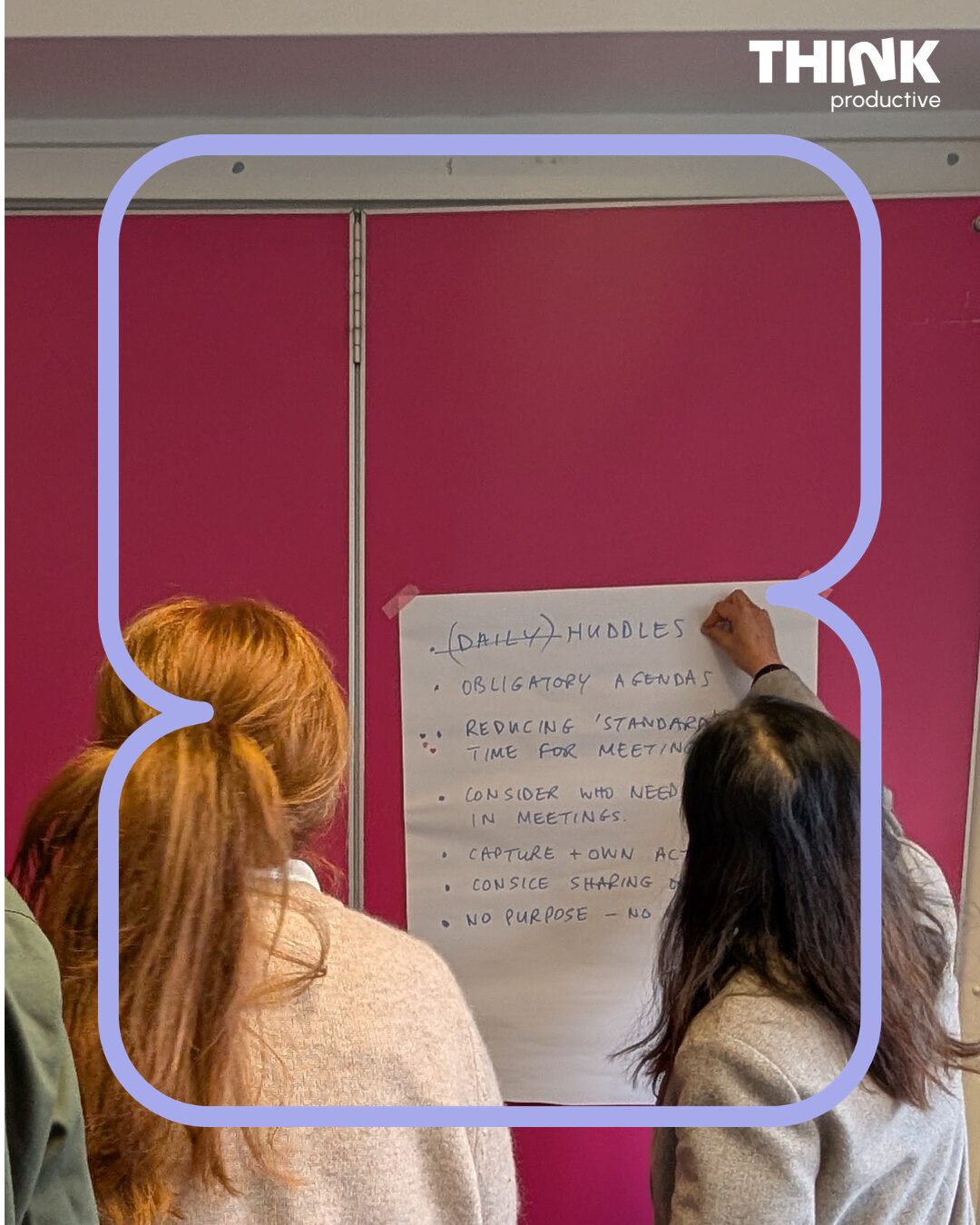
What you’ll do
You’ll start by understanding the theory of emotional intelligence in plain terms, then reflect honestly on your own level, using a quiz and framework designed to spot your specific weak areas rather than deliver generic advice. From there, you’ll identify your own emotional triggers, why they trigger you specifically, and what tends to sit behind them, often values you didn’t realise were in play.
The session creates real room for conversation about a subject that can feel sensitive, kept on track and genuinely useful rather than uncomfortable. You’ll build practical strategies for managing your own emotional responses and understanding others’, leaving with transferable skills you can apply anywhere, not just in this specific team.
What happens when emotional intelligence is built
When teams build real emotional intelligence, everything changes:
- People notice their own triggers before they derail a conversation
- Feedback gets given and received without it turning into conflict
- Tension gets named and worked through, instead of sitting underneath the surface
- Perspective-taking becomes normal, not just something for the difficult conversations
- Teams go from coping under pressure to genuinely excelling
Creed Food Service
“Russell made it really easy to talk about a sometimes sensitive subject, allowing lots of room for conversation while keeping us on track.” Sam Puddy
Benefits & results
The most immediate benefit is self-awareness: participants leave understanding their own specific emotional triggers, not a generic sense that emotional intelligence matters. But the deeper shift is relational. Once people understand their own patterns and other people’s, tension gets named instead of avoided, and feedback stops turning into conflict.
What your organisation gets
Teams who go from coping under pressure to genuinely excelling, with tension addressed early, feedback that lands well, and leaders who set a steadier emotional tone for everyone around them.
96%
of participants rated the session 4 or 5 out of 5 stars
Why it matters
Technical skill doesn’t disappear under pressure, but the ability to manage emotion does, and that’s usually what actually derails a capable team.
- Without understanding personal triggers, people react rather than respond, especially under pressure
- Tension and friction go unnamed, so small issues sit underneath the surface instead of getting resolved
- Feedback conversations become difficult or get avoided entirely, because nobody’s sure how to keep them from turning into conflict
Frequently Asked Questions
-
Yes. Some participants arrive feeling unsure or a bit sceptical. The workshop keeps things grounded and practical. We focus on everyday behaviours, communication and self-awareness rather than anything overly personal or therapeutic.
-
No. This is workplace-focused emotional intelligence. We explore how people understand themselves, how they relate to others and how they respond under pressure. Everything is taught in a clear, accessible way that supports day-to-day work.
-
Very much so. Leaders set the emotional tone for their teams. The workshop helps them improve self-awareness, handle difficult conversations more confidently and create a culture where people feel safe to speak up.
-
Very. We use simple tools, reflective exercises and real examples to help participants recognise triggers, stay calm under pressure and communicate with more clarity and empathy. People leave with actions they can use right away.