
Why does one bad feedback conversation still shape how your team talks years later?
Have you ever had a terrible feedback experience? If you said yes, you’re not alone. Giving and receiving feedback can feel stressful and uncomfortable, often because of a past conversation that didn’t go well and still lingers.
This session helps managers and teams see feedback as a gift, a practical opportunity to invest in someone else’s growth, and their own. You’ll learn and practise Think Productive’s WISER™ Feedback Model, built to engage the person receiving feedback and protect the relationship, not just deliver the message.
We recommend:
In-person or online
3hrs
Up to 20 people
What you’ll learn & do
This workshop empowers your teams to:
- Understand what effective, behaviour-based feedback actually sounds like
- Learn and practise the WISER™ Feedback Model in a safe, structured environment
- Recognise how timing, tone, intent and context change how feedback lands
- Navigate power dynamics and cross-cultural differences so feedback lands fairly
- Explore how AI can help refine clarity, tone and phrasing before a difficult conversation
97%
of participants rated the session 4 or 5 out of 5 stars
Who is this workshop for?
- People managers, project managers and team leaders who give feedback as part of the role
- Anyone who wants to build feedback skills, to feel better giving it and get better results from it
- New managers who find difficult conversations the hardest part of the role
- Teams wanting a shared model, so feedback conversations stop depending on who’s giving them
What this workshop offers
- A model, not just mindset. The Think Productive WISER™ Feedback Model gives a structure to fall back on, not just good intentions.
- Learning that lasts. Every participant gets access to the Productivity Ninja® Academy.
- A format that fits. 3 hours, in person or live online, for up to 20 people.
- AI as an ally. Practical ways to use AI to prepare for and practise difficult conversations before they happen.
- Built to stick. Add an Impact Clinic 1 and 3 months later to keep new habits alive.
What you’ll do
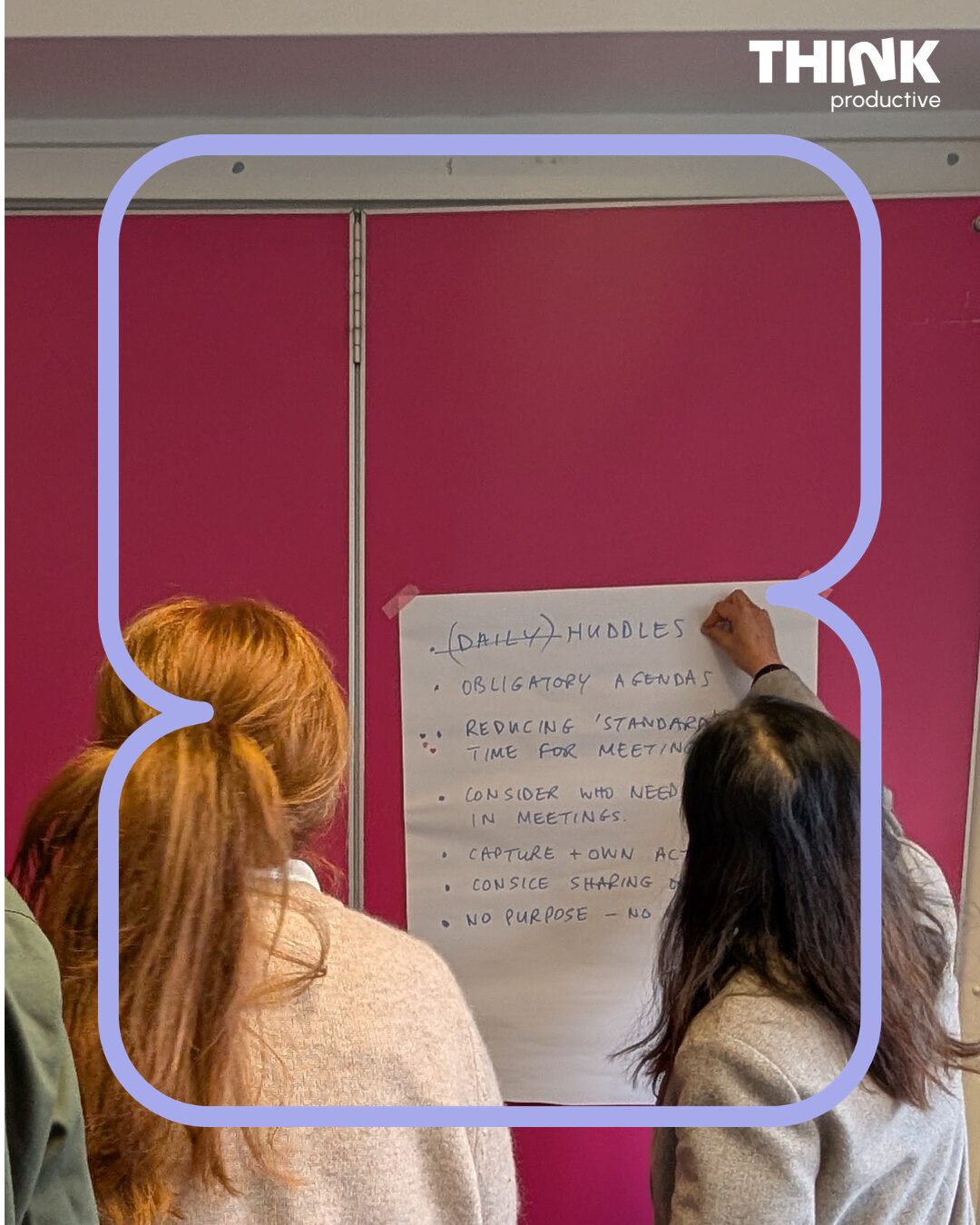
You’ll start with the difference between coaching, feedback and input, and what actually makes feedback land, the mindset and characteristics behind a genuinely good feedback experience, not just theory. From there, you’ll learn the WISER™ Model and practise it in a safe, encouraging environment, preparing for and delivering feedback the way you’ll actually need to back at work.
You’ll also tackle the realities that make feedback harder in practice: navigating cross-cultural differences in how feedback is given and received, managing power dynamics so it lands fairly across hierarchy, and what to do when feedback doesn’t land the way you intended. You’ll leave with a framework for planning and holding difficult conversations, and the confidence to use it sooner rather than putting it off.
What happens when feedback works
When teams build a shared model for feedback, everything changes:
- Difficult conversations happen sooner, before small issues turn into bigger ones
- Feedback lands as intended, instead of landing badly and getting avoided next time
- People stop softening feedback into vagueness, and say what actually needs saying
- Power dynamics and cultural differences stop derailing conversations that matter
- Feedback starts to feel like a normal part of working life, not a rare, risky event
BOOTS UK
“I think it’s a great blueprint for success.”
Tudor Powell
Benefits & results
The most immediate benefit is a framework: a repeatable structure for feedback conversations that doesn’t depend on who’s delivering it or how confident they’re feeling that day. But the deeper shift is cultural. Once a team shares a model and a language for feedback, honest conversations stop being rare, risky events and start becoming normal working life.
What your organisation gets
Managers who address issues sooner rather than avoiding them, feedback that builds trust instead of eroding it, and a team culture where honest conversations happen as a matter of course, not as a last resort.
BOOTS UK
“They’re the sort of soft skills that are easy to be aware of needing to improve, but actively taking the time to address that is a welcome opportunity.”
Why it matters
Most people haven’t been taught how to give feedback, only what happens when it goes badly, and that one bad memory shapes every conversation after it.
- One difficult past experience makes both giving and receiving feedback feel risky, so people avoid it or soften it into vagueness
- Without a shared model, feedback conversations become inconsistent, some land well, others land badly, and nobody’s sure why
- Power dynamics and cultural differences go unaddressed, so feedback that’s meant to help ends up landing unfairly or unevenly
Frequently Asked Questions
-
This workshop is ideal for people managers, L&D and People teams, and anyone who needs to hold performance, behaviour or wellbeing conversations as part of their role. It is designed for everyday workplace realities, not formal procedures.
-
Not exactly. The workshop focuses on everyday difficult conversations at work that feel awkward, tense or easy to delay. Participants learn practical ways to approach these conversations with clarity, confidence and kindness.
-
Yes. New managers often find difficult conversations the hardest part of the role. The workshop gives them simple tools and a supportive space to build confidence quickly.
-
No. While a key part of the workshop is practising how to give and receive feedback, no one is ever thrown into it without support. Participants are given time in the session to prepare, reflect and choose the examples they want to work with. The practice is structured, guided and respectful, so everyone can take part at a pace that feels safe and constructive.
-
Participants leave with a clear framework for planning and holding difficult conversations, a calmer mindset, and practical tools that reduce stress and improve communication. They also build confidence to address issues sooner rather than later.
-
Yes. We explore where AI tools can support clarity, preparation and documentation for difficult conversations, and where human judgement is essential. The emphasis is on using AI responsibly while keeping communication real, human and grounded.